


Artificial Intelligence (AI) is transforming the way we live and interact with technology, with its ever-growing importance in our fast-paced and intricate world. As AI becomes more prevalent, it both accelerates our progress and poses its own unique challenges. This goes beyond simple convenience and has major impacts on human expectations, mental well-being, and overall contentment. Today digital literacy is as important as emotional intelligence, a legacy from our evolutionary predecessors. Traits such as intelligence, physical endurance, and problem-solving allowed our ancestors to survive and adapt to new environments. Today, AI is constantly reshaping the dynamics of human expectations, critically challenging our priorities in life. The individuals who develop the ability to learn, grow, and adapt according to the challenges and opportunities presented will have a competitive edge to succeed in the digital age; much like our ancestors who developed skills to survive in an unknown world, so long ago.
Last week, I attended a gathering focused on "AI in Drug Discovery" in Newark, NJ. This event brought together a consortium of experts and researchers to delve into the transformative impact of AI algorithms and machine learning techniques on the drug discovery process. As I absorbed the insights shared by the panelists, it struck me how our expectations, as scientists, have evolved in tandem with the advent of sophisticated software.
In the past, we were satisfied in our ability to analyze the expression of a single gene across multiple cells. However, in our current landscape, it has become a universal expectation to identify the simultaneous expression of 20,000 genes within a single cell, with the added desire to comprehend how that cell interacts with its neighboring counterparts. This stark evolution in expectations reflects the dynamic nature of the challenges we encounter in our research, prompting me to contemplate the fluidity of our expectations and how we navigate these shifts.
This introspection led me to ponder the intricate interplay of genes, culture, and now AI in shaping the human condition. In our ever-advancing world, AI assumes an increasingly central role, ushering in a transformation of our daily lives and our interaction with technology. This transcends mere convenience; AI serves as the catalyst for a shift in the very nature of human expectations.
In this paradigm, our imaginations and creativity are boundless, unrestrained by conventional limits. We are now privy to the realm of the possible, and the pursuit of our envisioned future hinges on our ability to extend longevity or even create AI-augmented versions of ourselves.
Within this AI-driven landscape, the acceleration of expectations becomes apparent. In this swiftly evolving world, traits such as digital literacy and emotional intelligence are highly coveted. We realize that maintaining youthfulness, fostering creativity, and expanding our lifespan are essential elements to strike a balance amid these heightened expectations.
This contemplation invites us to ponder the liberation from genetic determinism*. It suggests that we have the potential to chart our own course towards enhanced well-being and happiness.
Great Expectations in the Age of AI
AI has transformed our lives, raising our expectations for instant, personalized solutions. We now anticipate instant responses, personalized experiences, and seamless solutions across various facets of our lives. From e-commerce's hyper-personalization to streaming's immediate access, AI shapes our demands.
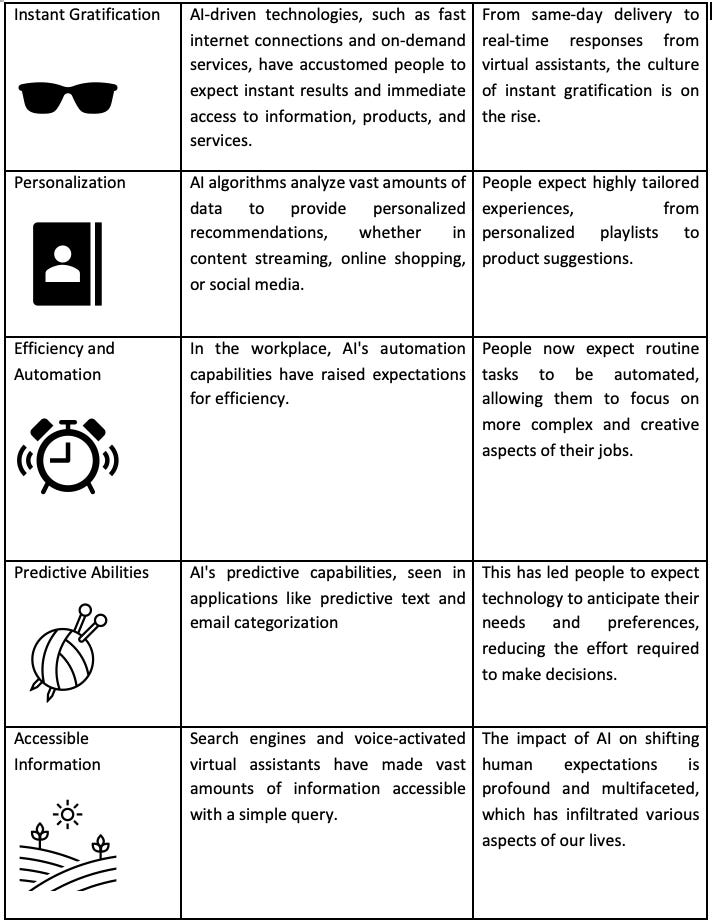
In the workplace, AI boosts productivity but intensifies expectations. It accelerates progress in healthcare, finance, and more, fostering a need for quick, seamless experiences. In customer service, AI chatbots set new standards, and professionals expect automation-driven efficiency. AI has redefined norms, driving us towards instant, tailored solutions.
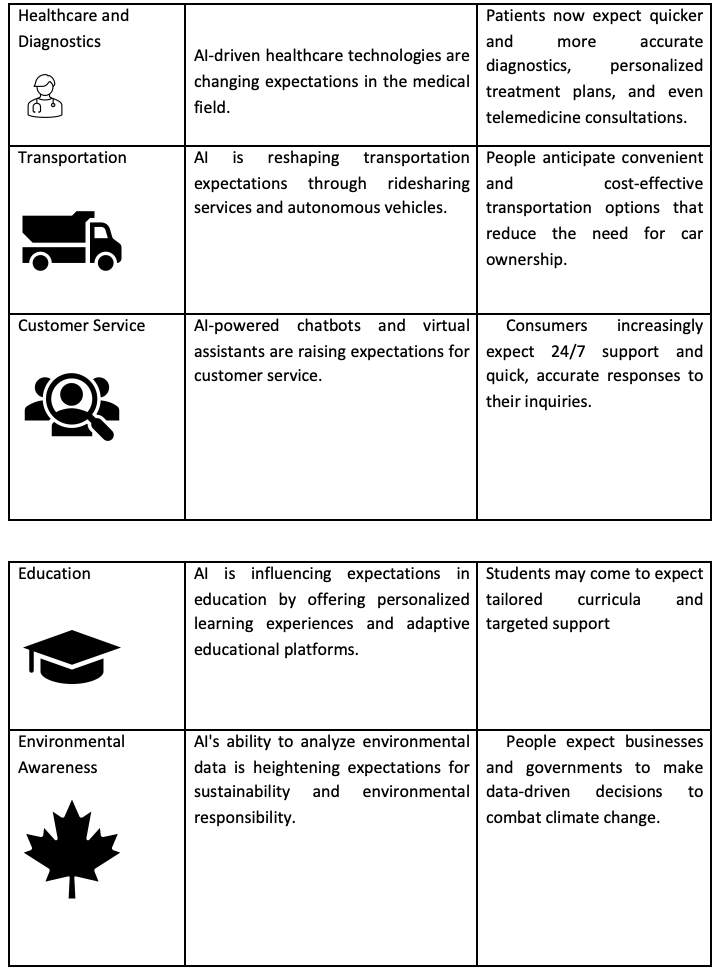
In this age of AI, our expectations have soared to new heights, shaped by the rapid progress and unparalleled convenience it affords. As we navigate this ever-evolving landscape, our relationship with technology continues to redefine what we consider the new norm.
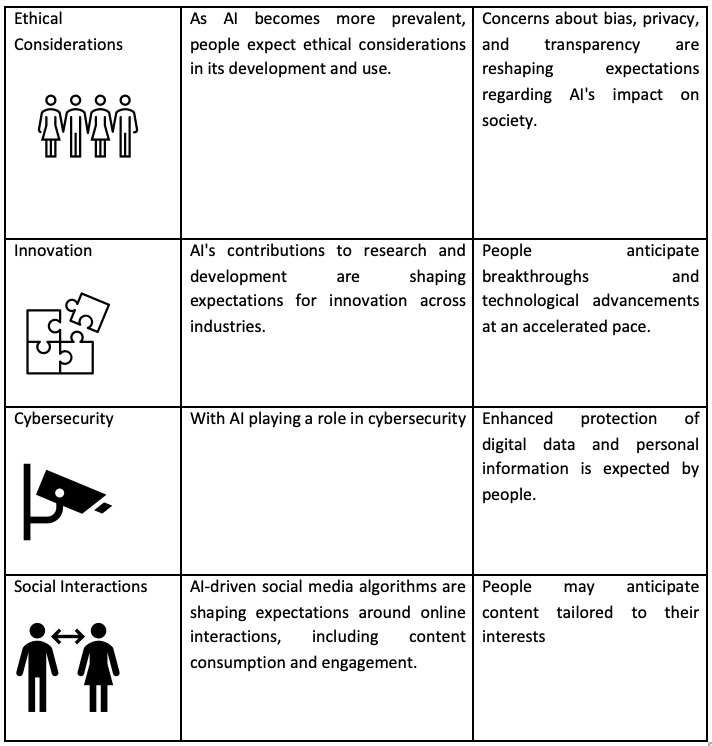
AI is fundamentally altering human expectations by offering increased convenience, personalization, efficiency, and predictive capabilities across various domains. As AI continues to advance, these shifting expectations will likely influence how individuals interact with technology, businesses, and society as a whole. It is essential for both individuals and organizations to adapt to this changing landscape to effectively harness the benefits of AI while addressing potential challenges.
AI's Role in Mental Health Challenge
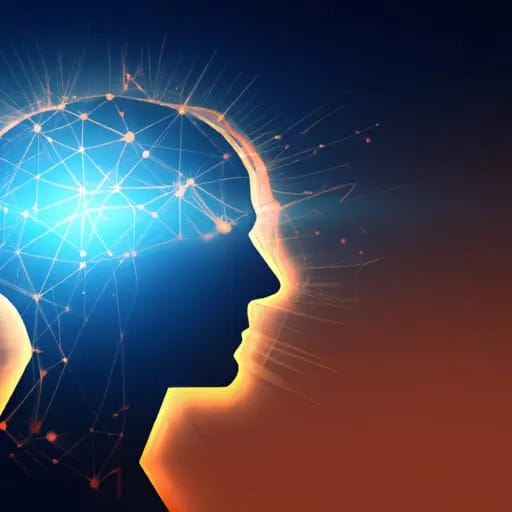
While AI brings benefits in terms of efficiency and convenience, it also presents significant mental health concerns. The breakneck pace of technological evolution can foster anxiety, stress, and a persistent sense of not measuring up. Individuals struggle in the race to keep pace with the ceaseless demands of both their personal and professional lives.
Additionally, social media platforms, through the curation of images and narratives, have the capacity to amplify feelings of inadequacy. The relentless pressure to conform to AI-defined beauty ideals and lifestyle trends can set individuals on a never-ending cycle of discontent and anxiety.
Paradoxically, AI also emerges as a part of the solution to address these mental health challenges. AI-driven mental health applications and chatbots offer accessible and discreet support for those grappling with mental health issues. They provide a non-judgmental space for individuals to express their feelings and seek guidance, contributing to the de-stigmatization of mental health concerns.
Furthermore, AI enhances the capabilities of mental health professionals by aiding in diagnostics and treatment and enabling the formulation of personalized treatment plans. This data-driven approach not only elevates the quality of mental health care but also augments the likelihood of achieving positive outcomes in treatment.
Striking a Balance
To harness the benefits of AI while mitigating its potential negative impact, it is essential to strike a balance. This balance involves promoting digital literacy and emotional intelligence, which may be, compared to our early evolution of traits like intelligence, problem-solving abilities, and physical endurance that paved the way for our experiences of the world in several compelling ways. These traits are the modern survival tools that enable individuals to make informed decisions, build meaningful relationships, and adapt to the challenges of the digital era.
Evolution is an ongoing process, shaping species over time. Similarly, in the AI-driven world, the need for continual adaptation remains constant. Just as our ancestors had to adapt to changing environments, individuals today must adapt to evolving technology and societal expectations.
In essence, human evolution goes far beyond intelligence and problem-solving abilities. While these traits are undoubtedly crucial, our evolutionary journey is far more complex. Beyond digital literacy and emotional intelligence, creativity, adaptability, and ethical decision-making are equally important in navigating the complexities of the digital age.
Sweet Anticipation
Evolutionary expectations are grounded in reason, but they operate within the confines of cognitive limitations. In his book "Sweet Anticipation," David Huron introduces a compelling concept: emotions tied to anticipation or expectation encompass five distinct reflexes, each serving a unique function and contributing to a complex array of feelings. These reflexes encompass defensive reactions, stress responses triggered by uncertainty, a sense of reward associated with accurate predictions, the capacity to facilitate deferred gratification, and responses that emerge after conscious thought comes into play.
Although originally conceived within the context of Huron's exploration of how music can evoke emotions, these distinct reflexes can be readily applied to understand how humanity's expectations from AI will shape human experiences.
The key question revolves around how individuals, each with varying cognitive abilities, perceive the rationality of their expectations.
A significant diversity exists within the human species. Different individuals possess varying levels of digital literacy and emotional intelligence, just as early humans had diverse traits and abilities. Thus, individual perceptions play a pivotal role in determining whether these expectations lead to a sense of entitlement, which, in turn, could impose negative outcomes in interactive systems. Ultimately, the key lies in striking a balance between the conveniences AI offers and fine tuning of our reflexes in a rapidly evolving world.
Source:
1. Evolutionary Expectations by Uruk William Nash. 2016. https://link.springer.com/referenceworkentry/10.1057/978-1-349-94848-2_314-1
2. Artificial intelligence in mental health research: new WHO study on applications and challenges. 2023. https://www.who.int/europe/news/item/06-02-2023-artificial-intelligence-in-mental-health-research--new-who-study-on-applications-and-challenges.
2. Sweet Anticipation: Music and the Psychology of Expectation by David Huron. The MIT Press. 2006. https://direct.mit.edu/books/book/1961/Sweet-AnticipationMusic-and-the-Psychology-of
3. Traits, genes, particles, and information: revisiting students’ understandings of genetics by Lewis J, Kattmann U. 2004. https://www.tandfonline.com/doi/abs/10.1080/0950069032000072782